 An official website of the United States government
Asian Ginseng
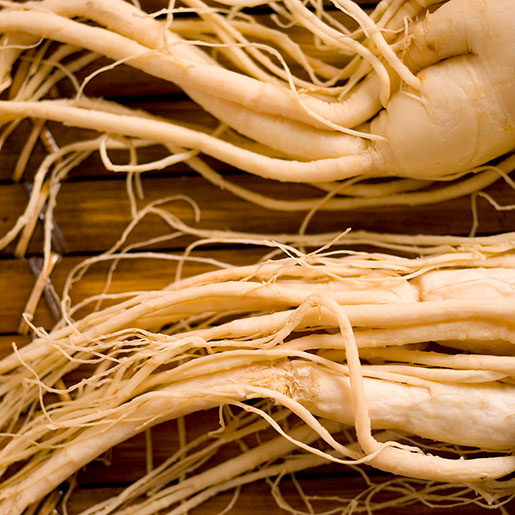
Common Names: Asian ginseng, Chinese ginseng, Korean ginseng, red ginseng, white ginseng
Latin Names: Panax ginseng
Background
- Asian ginseng is native to the Far East, including China, Korea, and far-eastern Siberia. It has been used for health-related purposes in traditional Chinese medicine for thousands of years.
- Asian ginseng is one of several types of ginseng. The terms red ginseng and white ginseng refer to Asian ginseng roots prepared in two different ways.
- The part of the plant most frequently used for health purposes is the root.
- Asian ginseng taken orally is promoted for increasing resistance to environmental stress and as a general tonic to improve well-being. Asian ginseng is also promoted as a dietary supplement for a variety of other reasons—to improve physical stamina, concentration, and memory; stimulate immune function; slow the aging process; and relieve various other health problems, such as respiratory and cardiovascular disorders, depression, anxiety, and menopausal hot flashes. Topical use (applied to the skin) of Asian ginseng as part of a multi-ingredient preparation is promoted for premature ejaculation.
- Asian ginseng contains many substances; those thought to be most important are called ginsenosides (or panaxosides).
How Much Do We Know?
- Many of the published randomized controlled trials on Asian ginseng may not be high-quality studies. Therefore, our understanding of Asian ginseng’s health effects is limited.
What Have We Learned?
- Results from a 2013 review of 65 randomized controlled trials suggest that Asian ginseng may help improve glucose metabolism and lower blood sugar. However, the scientists who published the review noted some issues with the studies they examined: that many were not high quality and that ginseng preparations were diverse.
What Do We Know About Safety?
- Short-term oral use (up to 6 months) of Asian ginseng in recommended amounts appears to be safe for most people. However, questions have been raised about its long-term safety, and some experts recommend against its use by infants, children, and women who are pregnant or breastfeeding.
- When used short-term as part of a specific multi-ingredient topical skin application, Asian ginseng is likely safe. Safety after prolonged repetitive topical use has not been determined.
- Insomnia (trouble sleeping) is the herb’s most common side effect. Others include menstrual problems, breast pain, increased heart rate, high or low blood pressure, headache, loss of appetite, and digestive problems.
- Some evidence suggests that Asian ginseng might affect blood sugar. If you have diabetes, consult your health care provider before using Asian ginseng.
- There are uncertainties about whether ginseng might interact with certain medications, such as calcium channel blockers and other high blood pressure medications, as well as statin medications and some antidepressants. Studies on the effect of Asian ginseng on the anticoagulant (blood thinner) warfarin (Coumadin) have had mixed results. If you’re taking medication, consult your health care provider before using Asian ginseng.
- Asian ginseng may be unsafe when taken orally during pregnancy. One of the chemicals in it has been found to cause birth defects in animals. Little is known about whether it’s safe to use Asian ginseng while breastfeeding.
Keep in Mind
- Take charge of your health—talk with your health care providers about any complementary health approaches you use. Together, you can make shared, well-informed decisions.
NCCIH Clearinghouse
The NCCIH Clearinghouse provides information on NCCIH and complementary and integrative health approaches, including publications and searches of Federal databases of scientific and medical literature. The Clearinghouse does not provide medical advice, treatment recommendations, or referrals to practitioners.
Toll-free in the U.S.: 1-888-644-6226
Telecommunications relay service (TRS): 7-1-1
Website: https://www.nccih.nih.gov
Email: info@nccih.nih.gov (link sends email)
PubMed®
A service of the National Library of Medicine, PubMed® contains publication information and (in most cases) brief summaries of articles from scientific and medical journals. For guidance from NCCIH on using PubMed, see How To Find Information About Complementary Health Approaches on PubMed.
Website: https://pubmed.ncbi.nlm.nih.gov/
Office of Dietary Supplements (ODS), National Institutes of Health (NIH)
ODS seeks to strengthen knowledge and understanding of dietary supplements by evaluating scientific information, supporting research, sharing research results, and educating the public. Its resources include publications (such as Dietary Supplements: What You Need To Know) and fact sheets on a variety of specific supplement ingredients and products (such as vitamin D and multivitamin/mineral supplements).
Website: https://ods.od.nih.gov
Email: ods@nih.gov (link sends email)
Key References
- Asher GN, Corbett AH, Hawke RL. Common herbal dietary supplement-drug interactions. American Family Physician. 2017;96(2):101-107.
- He M, Huang X, Shuying L, et al. The difference between white and red ginseng: variations in ginsenosides and immunomodulation. Planta Medica. 2018;84(12-13):845-854.
- Panax ginseng. Natural Medicines website. Accessed at naturalmedicines.therapeuticresearch.com on November 25, 2019. [Database subscription].
- Shergis JL, Zhang AL, Zhou W, et al. Panax ginseng in randomised controlled trials: a systematic review. Phytotherapy Research. 2013;27(7):949-965.
This publication is not copyrighted and is in the public domain. Duplication is encouraged.
NCCIH has provided this material for your information. It is not intended to substitute for the medical expertise and advice of your health care provider(s). We encourage you to discuss any decisions about treatment or care with your health care provider. The mention of any product, service, or therapy is not an endorsement by NCCIH.