 An official website of the United States government
Ginger
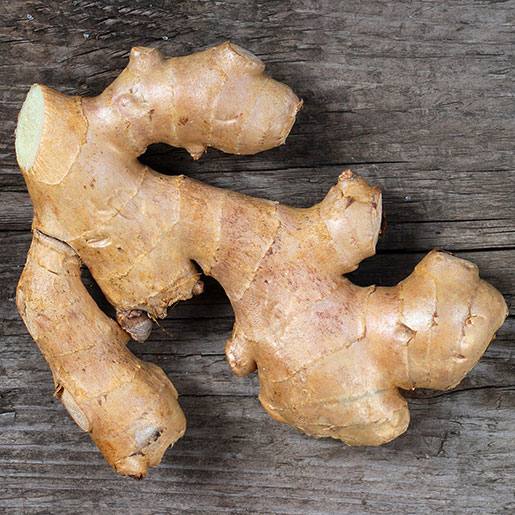
Common Names: ginger
Latin Names: Zingiber officinale
Background
- Native to parts of Asia, such as China, Japan, and India, ginger has a leafy stem and yellowish-green flowers. The spice comes from the rhizome (underground stem) of the plant.
- Ginger has been used for medicinal purposes in China for more than 2,500 years, and it has had a prominent role in Chinese, Indian, and Japanese medicine since the 1500s.
How Much Do We Know?
- There have been many studies of the use of ginger for health purposes in people.
What Have We Learned?
- Ginger has been studied for several types of nausea and vomiting. Almost all of these studies tested dietary supplements rather than foods.
- Research shows that ginger may be helpful for mild nausea and vomiting associated with pregnancy.
- Most studies of ginger for motion sickness haven’t shown it to be helpful.
- In general, ginger hasn’t been shown to relieve nausea and vomiting associated with cancer chemotherapy, although it might be helpful if taken in combination with certain types of chemotherapy or certain drugs used to prevent nausea and vomiting.
- It’s uncertain whether ginger is helpful for postoperative nausea and vomiting.
- A small amount of research suggests that ginger dietary supplements might be helpful for menstrual cramps.
- There’s not enough evidence to show whether ginger supplements are helpful for symptoms of knee osteoarthritis.
What Do We Know About Safety?
- Ginger has been used safely in many research studies where it was taken orally (by mouth) as a dietary supplement. Ginger products may also be safe for topical use (on the skin).
- Ginger can have side effects such as abdominal discomfort, heartburn, diarrhea, and mouth and throat irritation, especially if taken in large doses.
- Some studies of the use of ginger during pregnancy suggest it is safe, but the evidence is not conclusive. If you’re considering using ginger while pregnant, consult your health care provider. Little is known about whether it’s safe to use ginger while breastfeeding.
Keep in Mind
- Take charge of your health—talk with your health care providers about any complementary health approaches you use. Together, you can make shared, well-informed decisions.
NCCIH Clearinghouse
The NCCIH Clearinghouse provides information on NCCIH and complementary and integrative health approaches, including publications and searches of Federal databases of scientific and medical literature. The Clearinghouse does not provide medical advice, treatment recommendations, or referrals to practitioners.
Toll-free in the U.S.: 1-888-644-6226
Telecommunications relay service (TRS): 7-1-1
Website: https://www.nccih.nih.gov
Email: info@nccih.nih.gov (link sends email)
PubMed®
A service of the National Library of Medicine, PubMed® contains publication information and (in most cases) brief summaries of articles from scientific and medical journals. For guidance from NCCIH on using PubMed, see How To Find Information About Complementary Health Approaches on PubMed.
Website: https://pubmed.ncbi.nlm.nih.gov/
Office of Dietary Supplements (ODS), National Institutes of Health (NIH)
ODS seeks to strengthen knowledge and understanding of dietary supplements by evaluating scientific information, supporting research, sharing research results, and educating the public. Its resources include publications (such as Dietary Supplements: What You Need To Know) and fact sheets on a variety of specific supplement ingredients and products (such as vitamin D and multivitamin/mineral supplements).
Website: https://ods.od.nih.gov
Email: ods@nih.gov (link sends email)
Key References
- Araya-Quintanilla F, Gutierrez-Espinoza H, Munoz-Yanez MJ, et al. Effectiveness of ginger on pain and function in knee osteoarthritis: a PRISMA systematic review and meta-analysis. Pain Physician. 2020;23(2):E151-E161.
- Crichton M, Marshall S, Marx W, et al. Efficacy of ginger (Zingiber officinale) in ameliorating chemotherapy-induced nausea and vomiting and chemotherapy-related outcomes: a systematic review update and meta-analysis. Journal of the Academy of Nutrition and Dietetics. 2019;119(12):2055-2068.
- Ginger. Natural Medicines website. Accessed at naturalmedicines.therapeuticresearch.com on March 5, 2020. [Database subscription].
- Khorasani F, Aryan H, Sobhi A, et al. A systematic review of the efficacy of alternative medicine in the treatment of nausea and vomiting of pregnancy. Journal of Obstetrics and Gynaecology. 2020;40(1):10-19.
- McParlin C, O’Donnell A, Robson SC, et al. Treatments for hyperemesis gravidarum and nausea and vomiting in pregnancy: a systematic review. JAMA. 2016;316(13):1392-1401.
- Pattanittum P, Kunyanone N, Brown J, et al. Dietary supplements for dysmenorrhoea. Cochrane Database of Systematic Reviews. 2016;(3):CD002124. Accessed at www.cochranelibrary.com on August 31, 2020.
- Tóth B, Lantos T, Hegyi P, et al. Ginger (Zingiber officinale): an alternative for the prevention of postoperative nausea and vomiting. A meta-analysis. Phytomedicine. 2018;50:8-18.
- Xu Y, Yang Q, Wang X. Efficacy of herbal medicine (cinnamon/fennel/ginger) for primary dysmenorrhea: a systematic review and meta-analysis of randomized controlled trials. Journal of International Medical Research. 2020;48(6):1-12.
This publication is not copyrighted and is in the public domain. Duplication is encouraged.
NCCIH has provided this material for your information. It is not intended to substitute for the medical expertise and advice of your health care provider(s). We encourage you to discuss any decisions about treatment or care with your health care provider. The mention of any product, service, or therapy is not an endorsement by NCCIH.